David eta Betsabé
Fitxa
-
Izenburua
-
eu
David eta Betsabé
-
es
David y Betsabé
-
en
David and Bathsheba
-
Deskripzioa
-
eu
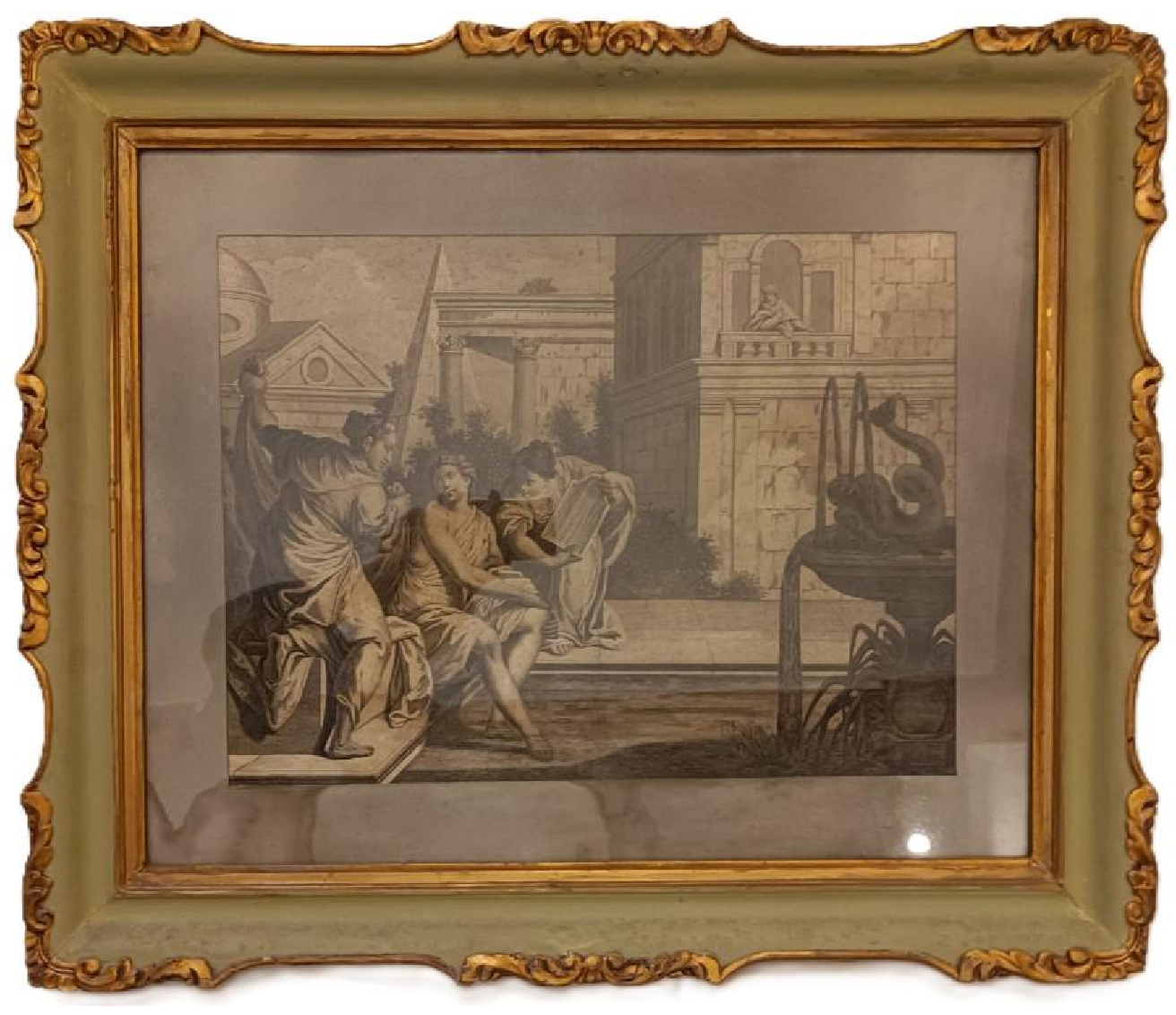
Irudikatutako eszena Samuelen liburutik aterata dago (2, 2-27). Bertan, Betsabe eta Daviden istorioa kontatzen da. Urias hititaren emaztea zen, eta erregeak ustekabean harrapatu zuen bainua hartzen ari zela. Bere edertasunaz liluraturik, Davidek konspiratu egin zuen une horretatik aurrera Uriasen aurka, haren heriotza lortu eta Betsabé emaztetzat hartu arte, eta horrek ez zuen Jauna atsegin izan. Eszenan, David erregeak jauregiko terrazatik Betsabe ederrari lehen aldiz begiratzen dion une zehatza irudikatzen da. Bera urmael baten ertzean eserita agertzen da. Bertan, eskuinaldean, ur ugari darion iturri monumental bat nabarmentzen da. Uriasen emazteari bi neskamek laguntzen diote, batek oihal handi batez estaltzen du berehala, besteak ispilu bat eskaintzen dion bitartean. Idealizatutako arkitektura klasikoen atzealde baten gainean, David erregearen irudia nabarmentzen da. Honek, balkoi batetik, hiru emakumeek eskaintzen duten eszena intimoa estaltzen du ezkutuan. Grabatuaren oinean latinez inprimatutako legendak esplizituki lotzen du istorio bibliko hau bederatzigarren agindu kristauarekin (ez duzu zure lagun hurkoaren emaztea gutiziatuko).
-
es
La escena representada está extraída del libro de Samuel (2, 2-27). En ella se narra la historia de Betsabé y de David. Ella, esposa de Urías el Hitita, fue sorprendida por el rey de manera accidental mientras tomaba su baño. Prendado de su belleza, David conspiró a partir de ese momento contra Urías, hasta conseguir su muerte y así poder tomar como esposa a Betsabé, lo que desagradó al Señor. Se representa el momento preciso en el que el rey David contempla desde su terraza de palacio a la bella Betsabé por primera vez. Ella aparece sentada al borde de un estanque en el que destaca, en la parte derecha, una monumental fuente de la que mana abundante agua. La mujer de Urías es asistida por dos sirvientas, una se apresura a cubrirla con un gran paño, en tanto que la otra le ofrece un espejo. Sobre un fondo de arquitecturas clásicas idealizadas, destaca la figura del rey David, el cual otea secretamente desde una balconada la íntima escena que ofrecen las tres mujeres. La leyenda en latín impresa al pie del grabado relaciona esta historia biblica de forma explícita con el noveno mandamiento cristiano (no codiciarás la mujer de tu prójimo).
-
en
The scene depicted is taken from the Book of Samuel (2, 2-27). It tells the story of Bathsheba and David. Bathsheba, the wife of Uriah the Hittite, was accidentally surprised by the king while taking a bath. Enamored of her beauty, David conspired from that moment against Uriah, until he succeeded in killing him so that he could take Bathsheba as his wife, which displeased the Lord. The scene depicts the precise moment when King David sees the beautiful Bathsheba for the first time from his palace terrace. She appears seated on the edge of a pond in which, on the right side, a monumental fountain stands out from which abundant water flows. Uriah',s wife is assisted by two servants, one rushes to cover her with a large cloth, while the other offers her a mirror. Against a background of idealized classical architecture, the figure of King David stands out, secretly watching from a balcony the intimate scene offered by the three women. The Latin legend printed at the bottom of the engraving explicitly relates this biblical story to the ninth Christian commandment (you shall not covet your neighbor',s wife).
-
Egilea
-
Jorma Reino Unido , 1720 - Tavistock Row, Westminster, Reino Unido, 30/12/1799; Moard, Francesco Italia , 1700 - Italia , 1799See all items with this value
-
Data
-
Segunda mitad del siglo XVIII
-
Hedadura
-
eu
34,5 x 48 zm
-
es
34,5 x 48 cm
-
Harrermana
-
https://www.calcografica.it/stampe/inventario.php?id=S-FC4036
-
Eskubideen titularra
-
eu
Olaso Dorrea Fundazioa
-
Identifikatzailea
-
ODMU_0001
-
edukia
-
Arte y Artes decorativas

 ODMU_0001.jpg